"Knowing our religion to be true we ought to be the most devoted people on the face of the earth to the cause we have embraced. Knowing as we do, or should know, that the gospel we have received promises all our hearts can wish or desire, if we are faithful, we ought to be very faithful, devoted, energetic and ambitious in carrying out the designs and wishes of the Lord as He reveals them from time to time through His servants. (Chapter 15: Faithful, Energetic Service in the Kingdom of God)"
Lorenzo Snow
Monday, August 12, 2013


Sunday, July 14, 2013
A Gospel Habit
~ William R. Bradford [Ensign, Nov. 1979, 37-38]
Wednesday, February 27, 2013
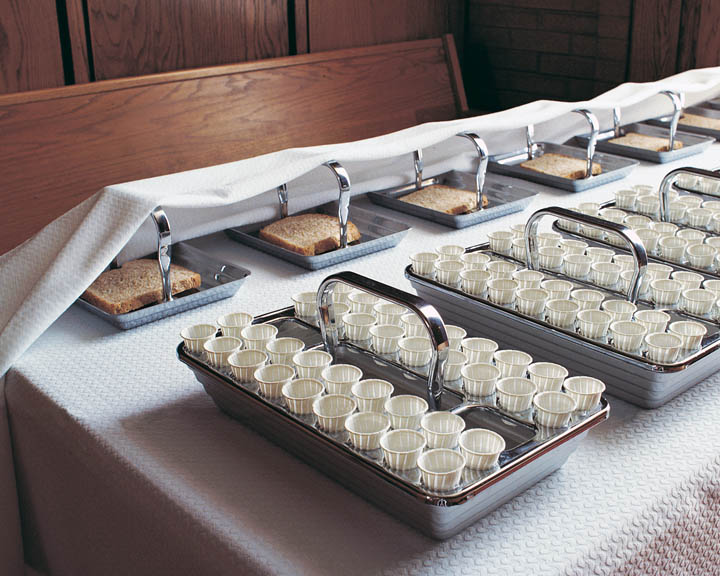
The Sacrament, not the Cross
"The world at large has the idea that the
symbol of Christianity is the cross, but it's no such thing. The cross is the
symbol of the cruelest form of torture and execution that the Romans could
devise; that is what the cross is for. Christ did not give us the cross as the
symbol of his great Atonement. He gave us, instead, the sacrament of the Lord's
Supper and told us to partake of that bread and drink of that cup in
remembrance of his blood and his broken flesh. Did he not give us that great
ordinance emblematic of the suffering on the cross? Of course he did. We get it
from no other place. He did not say to venerate the cross, he said to partake
of the sacrament and always remember him and pledge to high heaven that we will
always keep the commandments of Almighty God." —Elder Mark E. Petersen,
Wednesday, February 6, 2013
Supportive Life
"My role in life has mostly been a supportive one, and I have felt no need to apologize for that."

Reconciliation
I think the Lord is very interested in reconciliation. I
think the whole plan centers on reconciliation; the atonement was a
superhuman effort to reconcile as many of our Parents' children as
possible to Them; and an important part of our reconciliation with God
is to be reconciled with each other.

-Bonnie Blythe
Saturday, January 5, 2013
Tuesday, January 1, 2013
The Kiss
The great Hungarian concert pianist Andor Földes tells the remarkable
story of the watershed moment in his rise to world renown. He was 16
years old and already a veteran of years of intense practice and
performance. The pianist Emil von Sauer, Franz Liszt's last surviving
pupil, came to Budapest and asked young Andor to play for him. Having
listened intently to him playing Bach's Toccata in C Major, von Sauer
requested another piece. Andor put all his heart and skill into playing
Beethoven's "Pathetique" sonata, then continued with Schumann's
"Papillons." Finally, after a long pause, von Sauer slowly rose, took
the young man's head into his hands, and kissed him on the forehead. "My
son," he said tenderly, "when I was your age I became a student of
Liszt. He kissed me on the forehead after my first lesson, saying, 'Take
good care of this kiss—it comes from Beethoven, who gave it to me after
hearing me play.' I have waited for years to pass on this sacred
heritage, and now I feel you deserve it." (From Andor Földes,
"Beethoven's Kiss," Reader's Digest, November 1986, 145.)
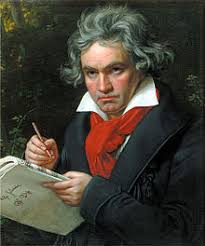 Andor Földes rose to the expectation. Beethoven's kiss miraculously
lifted him from the high level at which he was performing and put him on
a level of real greatness. The incomparable greatness and uniqueness of
Beethoven survives in many ways, but none more personally or more
powerfully than through the mentoring of those touched by this kiss
symbolic of his greatness and uniqueness.
Andor Földes rose to the expectation. Beethoven's kiss miraculously
lifted him from the high level at which he was performing and put him on
a level of real greatness. The incomparable greatness and uniqueness of
Beethoven survives in many ways, but none more personally or more
powerfully than through the mentoring of those touched by this kiss
symbolic of his greatness and uniqueness.
Subscribe to:
Posts (Atom)